Friday, January 18, 2013

Search.certified-toolbar.com Hijacker Virus Removal Guide

How to get rid of Search.certified-toolbar.com and all the ads brought? It takes over my homepage and keep sending me to many other random sites.

Search-Certified-Toolbar-Virus
Search.certified-toolbar.com is not a reputable domain that you can trust. On the contrary, Search.certified-toolbar.com is a nasty hijacker virus that you have to remove to protect your computer from further damages. Search.certified-toolbar.com often comes bundled with free software installation from unreliable sites. Or in many cases, this hijacker virus will embed itself in legit programs or files. Once infected, Search.certified-toolbar.com will replace your homepage and redirect your search results to random sites that may be full of annoying ads or fake security alerts that trick you to download rogue malwares. Moreover, many other toolbars or add-ons will be added to your browsers. And you won’t be able to get back your homepage easily before this redirection virus is related with Trojans and will make changes to registries or default system settings, DNS or host settings, settling down to the infected PC firmly and leading to critical PC troubles. And the system will be vulnerable enough to be attacked by lots of viruses, such as adware, rogue malwares, or spywares. And confidential files or pass words for email address, Facebook or Online banking accounts are at great risk of being stolen, using as security shield for malicious schemes or financial loss. To sum up, Search.certified-toolbar.com is a big risk to compromised PC that you have to remove soon.

Search.certified-toolbar.com Is Known as Malicious Hijacker Virus

1. It penetrates into computer without any recognition;
2. Others horrible threats can be bundled with this virus;
3. Your personal data like bank account and passwords would be in high risk of exposure to the open;
4. It may redirect the browser to unwanted websites that contain more viruses or spywares;
5. It will degrade the computer performance significantly and crash down the system randomly.

Get Rid of Search.certified-toolbar.com Manually

The infections will use random names or fake system processes name so you need to check  carefully and make sure which one does not belong to Windows system or which one uses a system process name but in the wrong system location.
Step 1- open your Task Manager by pressing Ctrl+Alt+Delete keys and then stop the viruses and Trojans processes
random.exe
Step 2- remove any suspicious system files in your Local disk C: hard drive
%AppData%\[random].exe

%ProgramFiles%\LP\[random].tmp

%ProgramFiles%\LP\[random].exe

%Windows%\system32\[random].exe

%System%\drivers\[RANDOM CHARACTERS].sys
Step 3- open your Registry Editor program by navigating to Start Menu, type in Regedit, and then click OK. When you have been in Registry Editor, please check the following registry location and see whether there is any malicious registry entries:
HKEY_CURRENT_USER\Software\Microsoft\Windows\CurrentVersion\Policies\Explorer "NoDesktop" = '1'

HKEY_CURRENT_USER\Software\Microsoft\Windows\CurrentVersion\Run "[random].exe"

HKEY_LOCAL_MACHINE\SOFTWARE\Classes\Interface\[random numbers]

HKEY_CURRENT_USER\Software\Microsoft\Windows NT\CurrentVersion\Winlogon\Shell = [random]

Need Help to Carry out the Manual Removal Guide?

Manual removal is complex and risky task, as it refers to key parts of computer system. To avoid any unnecessary mistakes, it's recommended to get help from professional Tech Support Experts.
Get Experts Help

Wednesday, January 16, 2013

How to Remove Win 7 Total Security 2013 Virus?

How to completely remove Win 7 Total Security 2013 fake anti-virus program? Have tried logging in safe mode and tried several removal tools but this nasty virus refused to go. How can I delete Win 7 Total Security 2013 for good? It is blocking me whatever I run and PC is acting weirdly ever since this virus is on! I wanted computer fixed and stay safe from any other viruses!


Win 7 Total Security 2013 is not a reliable security tools that you can trust. On the contrary, Win 7 Total Security 2013 is a dangerous rogue malware that attacks your computer without your attention and tries to swindle your money by doing fake system scanning and releasing misleading and false security warning alerts. There are many other similar fake anti-virus/anti-spyware threats with different names. Those security rogue programs are wrapped with decent appearances, trying to trick you believe their legitimacy and spend money for the useless license keys or full version. Most people don't know where or how this fake program gets into their computers. Win 7 Total Security 2013 usually spreads via malicious sites that are planted with hidden virus codes and free programs that are embedded with Win 7 Total Security 2013 virus.

Once Win 7 Total Security 2013 gets into your PC, it will slyly root in the infected system by disguising as system files or processes, thus, survive from anti-virus program removals. And designed as a fake anti-virus program, Win 7 Total Security 2013 virus is enabled with the ability to block security tools that are related to its uninstallation.  And random registries are added so that Win 7 Total Security 2013 virus runs every time the Windows starts. And many other useless files are released to mingle system files, using as security shield for Win 7 Total Security 2013 virus. What is more, backdoor trojans are packed with this rogue malware to worsen damage and steal pass words for online banking accounts, email address or facebook.

The risk of Win 7 Security 2013 goes with time and therefore, requires immediately removal once found. Win 7 Security 2013 virus may repair its files, spread or update by itself. And more viruses and malwares will be installed to the compromised PC, causing system errors or critical performance troubles. In a word, Win 7 Security 2013 virus is a tricky danger to infected machine and don't fall for its trap! Find the following manual removal guide as reference and delete Win 7 Security 2013 virus once and for all!

Tuesday, January 15, 2013

How to Remove Win 7 Security 2013 Virus, Fake Security Malware Uninstall Guide

I don't know where Win 7 Security 2013 comes from. It seems it just gets into my computer all of a sudden. I don’t think I installed Win 7 Security 2013 and now it is telling me the system has been attacked by lots of viruses! I guess Win 7 Security 2013 program is fake and it is asking money when I try to activate it. Am I supposed to pay for it?
win-7-security-2013-virus
Win 7 Security 2013 is a rogue security malware that you should remove to protect your computer once found. Instead of fixing your system and keeping safe from all kinds of infections, Win 7 Security 2013 virus will pose a real risk to your computer. If unfortunately you fall for its trap and transfer money to buy the version of Win 7 Security 2013 , you are advised to dispute your money immediately!

Just as nasty as Win 7 Security 2013  and Win 7 Internet Security Pro 2013, Win 7 Security 2013 displays fake security alerts to scare computer users and get paid by urging them to pay for Win 7 Security 2013 fake.

Apart from those deceptive warnings, Win 7 Security 2013 virus can bring terrible damage to an infected PC. Registries are changes and system files are corrupted with random virus codes. What is more, it will block whatever you run, popping up a message says they are infected. Internet connection status is good but you will fail to get online, for your browsers are blocked. And critical system components will be deleted or disabled, leading to serious PC errors and programs running troubles. If not removed in time, Win 7 Security 2013 virus will manage to occur at safe mode and invite more trojan viruses by exploiting vulnerabilities. Therefore, you’d better take quick actions to remove Win 7 Security 2013 virus before it is too late!

How to Remove Win 7 Security 2013 Virus for Good?

Running as a fake anti-virus tool, Win 7 Security 2013 is enabled of complicated characteristics to cunningly escape from security programs. Windows firewall is switched off and Windows updates will encounter trouble as well. To completely get rid of Win 7 Security 2013 virus, you have to turn to manual removal guide.
1)  Start the infected PC in safe mode with networking or safe mode with command prompt.
2)  Remove processes.
Random.exe
3)  Remove files.
  • C:\Documents and Settings\All Users\Application Data\YbUyNeWOvrpYj.exe
  • C:\Documents and Settings\malwarehelp.org\Desktop\Windows Recovery.lnk
  • C:\Documents and Settings\malwarehelp.org\Local Settings\Temp\~DF6CF1.tmp
  • C:\Documents and Settings\malwarehelp.org\Start Menu\Programs\Windows Recovery\Uninstall Windows Recovery.lnk
  • C:\Documents and Settings\malwarehelp.org\Start Menu\Programs\Windows
4)  Remove registries
  • HKEY_CURRENT_USER\Software\Classes\.exe\shell
  • HKEY_CURRENT_USER\Software\Classes\.exe\shell\open
  • HKEY_CURRENT_USER\Software\Classes\.exe\shell\open\command
  • HKEY_CURRENT_USER\Software\Classes\.exe\shell\runas
  • HKEY_CURRENT_USER\Software\Classes\.exe\shell\runas\command  
  • HKEY_CURRENT_USER\Software\Classes\.exe\shell\start
  • HKEY_CURRENT_USER\Software\Classes\.exe\shell\start\command
NOTE: Manual removal is complex and risky task, as it refers to key parts of computer system, and is recommended only for advanced users. If you haven’t sufficient expertise on doing that, it's recommended to ask help from an online computer expert to manually remove it for you.
Get Experts Help

Monday, January 14, 2013

Adware Generic5.QVF Removal Guides

Is your computer acting weird due to Adware Generic5.QVF infection? Having gone through all resolving solutions but none is able to make a difference? This post and Tee Support online tech support team will help find the solutions.

What Is Adware Generic5.QVF?

Adware Generic5.QVF is another member of Adware Generic5 variant which tends to bring lots of annoyance in the infected system. The adware may trace with your browsing history and present relevant ads according to your browsing preference. These ads links are often linked with pages that are created to to generate pay-per-click revenue for the author or its client. What's more, some malicious links may be exploited by cyber fraudsters to install malware in the vulnerable system without any consent. Most associated Trojan are report to perform evil tasks such as stealing sensitive information like user name and important passwords.
It is reported that user may acquire Adware Generic5.QVF by downloading and installing free software which are masqueraded as fake installer or multimedia player. Since it's a huge threats to system integrity and end user's confidential information, Adware Generic5.QVF should be removed completely and promptly once upon the detection. Please follow below steps as reference to manually remove it:
Step 1: Restart the computer into safe mode with networking by pressing and holding F8 before Windows launches and selecting the needed mode with arrow keys.
Step 2: Search for and delete its related files in Local Disk C:
%AllUsersProfile%\{random}
C:\WINDOWS\System64/32\svchost.exe
%AllUsersProfile%\Application Data\.dll
%AllUsersProfile%\Application Data\.exe
Step 3: Navigate to remove the registry entries associated as below in Registry Editor:
HKEY_LOCAL_MACHINE\SOFTWARE\Microsoft\Windows NT\CurrentVersion\Winlogon\[random]
HKEY_LOCAL_MACHINE\SOFTWARE\Microsoft\Windows\CurrentVersion\policies\Explorer\Run\[random]
HKEY_USERS\.DEFAULT\Software\Microsoft\Windows\CurrentVersion\Internet Settings\[random]
HKEY_LOCAL_MACHINE\SYSTEM\ControlSet001\Services\svflooje\Enum\[random]

Notes:  If you are still confused with above procedures, please click here to contact a 24/7 online expert for more details.

XP Security 2013 Firewall Alert Removal Guides

There’s nothing comforting in the annoying appearance of XP Security 2013 Firewall Alert. No doubt, the computer functions pretty irony because of this scam which is rooted in the system. Don't know where to start to get rid of XP Security 2013 Firewall Alert? This post and Tee Support online tech support team will help find the solution.

A General Introduction to XP Security 2013 Firewall Alert

XP Security 2013 Firewall Alert claims to stand for computer infection, but it's not worthy of any attention actually since this is a fake firewall alert. XP Security 2013 is a rogue antivirus tool which is created with no virus database. In other words, the alleged Firewall of XP Security 2013 is just the imitation of a real one which is used to convinced users of a corrupted system, thus a timely cure is required. Cyber fraudsters exploit the psychological weakness of computer users to hawk its license key.

Besides, it may also generate automatic system scanning and keeps bombarding less experienced users of various infection reports successive to the scan. Please note that any warning that comes up pertaining to XP Security 2013 must not be treated seriously. At the same time, pay due attention to the presence of this fake antivirus utility in your computer since keeping this scam is surely dangerous to system integrity and security.  Move on to completely remove XP Security 2013 Firewall Alert now!

XP Security 2013 Screenshot


Taken Notice of Below Changes with XP Security 2013 Firewall Alert?

  • The system is flooded with various bogus notification about the fake Firewall alert.
  • You cannot open any webpage, executable files and installed antivirus.
  • Multiple Windows services are blocked, such as task manager, Firewall and security center.
  • You may find  downloaded files and download list are disappearing.
  • The computer may show blue screen of death, and start issue, and may others.

XP Security 2013 Firewall Alert Removal

As you may have experienced that XP Security 2013 Firewall Alert may block most of troubleshooting tools in the wild. As a matter of fact, the rogue components is also quite stubborn when it comes to the removal since it drops its harmless files in Windows system folders and acts like a real antivirus program which is hard for detecting devices to detect and delete. If this is the case, manual removal is your preferred solution to terminate XP Security 2013 Firewall Alert.


Step-by-Step Guides to Manually Remove XP Security 2013 Firewall Alert

Step 1: Restart the computer into safe mode with networking by pressing and holding F8 before Windows launches and selecting the needed mode with arrow keys.

Step 2: Search for and delete its related files in Local Disk C:

%AppData%\[random characters]
%Temp%\[random characters]
%UserProfile%\Templates\[random characters]

Step 3: Navigate to remove the registry entries associated as below in Registry Editor:

HKEY_USERS\.DEFAULT\Software\Microsoft\Internet Explorer\BrowserEmulation "TLDUpdates" = '1'
HKEY_CURRENT_USER\Software\Classes\.exe\shell\open\command "(Default)" = '"C:\Documents and Settings\[UserName]\Local Settings\Application Data\[random 3 characters].exe" -a "%1" %*'
HKEY_CLASSES_ROOT\.exe\shell\open\command "(Default)" = '"C:\Documents and Settings\[UserName]\Local Settings\Application Data\[random 3 characters].exe" -a "%1" %*'
HKEY_LOCAL_MACHINE\SOFTWARE\Clients\StartMenuInternet\FIREFOX.EXE\shell\open\command "(Default)" = '"%LocalAppData%\kdn.exe" -a "C:\Program Files\Mozilla Firefox\firefox.exe"'
HKEY_LOCAL_MACHINE\SOFTWARE\Clients\StartMenuInternet\FIREFOX.EXE\shell\safemode\command "(Default)" = '"%LocalAppData%\kdn.exe" -a "C:\Program Files\Mozilla Firefox\firefox.exe" -safe-mode'
HKEY_LOCAL_MACHINE\SOFTWARE\Clients\StartMenuInternet\IEXPLORE.EXE\shell\open\command "(Default)" = '"C:\Documents and Settings\[UserName]\Local Settings\Application Data\[random 3 characters].exe" -a "C:\Program Files\Internet Explorer\iexplore.exe"'
 
Important to Know: Manual removal is a complicated and tedious work in which you may have to deal with program files, .dll files and registry entries and any improper deletion may cause irreparable data loss. Please click here to contact a 24/7 online expert for more details if any help is needed.

Sunday, January 13, 2013

Vista Internet Security 2013 - How to Remove

Having troubles to terminate Vista Internet Security Firewall Alerts? Having been working on it for several hours but making no progress? This post and Tee Support online tech support team will help find the most effective solution the first time around.

A General Introduction to Vista Internet Security 2013


How do I remove Vista Internet Security 2013 virus? This is a common question raised by many Vista users around the globe, since this fake antivirus program launched immense contamination campaign without warnings. Like any other rogue security program aimed at collecting money by persuading less experienced users into paying money for its alleged full version, Vista Internet Security 2013 will also spear no efforts to create false impressions that the computer is highly at risk. Besides, the rogue adds some registry entries that make it possible for the virus to  be  started automatically together with every system startup. So it will become activated each time you switch your computer on and spawn numerous fake infection notification to scare you.

Vista Internet Security 2013 stands for the MultiRogue 2013 clan that shows phony out-of-nowhere security warnings when trying to run certain program with the option to activate protection and generate automatic scan and reports with fictitious infections. You will be asked to buy the registered version if trying to remove all threats. Nevertheless please note that Vista Internet Security 2013 is a fake antivirus software created without any virus dictionary and incapable of detecting or fixing any real infection. Under no circumstance should you donate money to cyber fraudsters since the scan and phony and preset.

Vista Internet Security 2013 Screenshot


Beware of Below Changes with Vista Internet Security 2013?


  • Vista Internet Security Firewall alerts shows up to block access to Internet and other executables. Some even cannot find nor open the downloaded files.
  • Non-stop system scanning followed by the horrible scan reports with various infection. Antivirus won't run, neither will you be able to update Windows or active other security-related services.
  • A strange window that says ' open with ...' when you are going to open certain program even an office file which always ends up failure to open the desired application.
  • Blue screen of death, unexpected restart and many other symptoms. If there aren't any removal steps, the situation will get worse and worse and at last, Windows won't be able to load at all.

Vista Internet Security 2013 Manual Removal Guides

Step 1: Restart the infected computer into safe mode with networking by pressing and holding F8 before Windows launches.
Step 2: Search for and manually delete below files:
%AllUsersProfile%\random.exe
%AppData%\Roaming\Microsoft\Windows\Templates\random.exe
%Temp%\random.exe
Step 3: Navigate to remove the registry entries associated as below in Registry Editor which can be opened with regedit command:
HKCU\Software\Microsoft\Windows\CurrentVersion\Run\Random.exe
HKLM\Software\Microsoft\Windows\CurrentVersion\Run\Random.exe
HKLM\SOFTWARE\Microsoft\Windows NT\CurrentVersion\Image File Execution Options\random.exe\

Notes:  If you are still confused with above procedures, please click here to contact a 24/7 online expert for more details.

Friday, January 11, 2013

Basicseek Search Removal Help

Google homepage taken over by Basicseek search and failed to change it back by resetting? Having tried several tools on its treatment but none is able to make a difference? This post and Tee Support online tech support team will help you remove Basicseek virus with manual method. Read more.

Basicseek Information

Basicseek is a browser hijacker that substitute your default search page and homepage. The adware also alters various DNS and HOSTS settings to interfere with the target web browser and redirecting your searches to preset domains. Besides, computer experts also find that it uses a browser helper object (BHO) to embed some code and manipulate the searches.
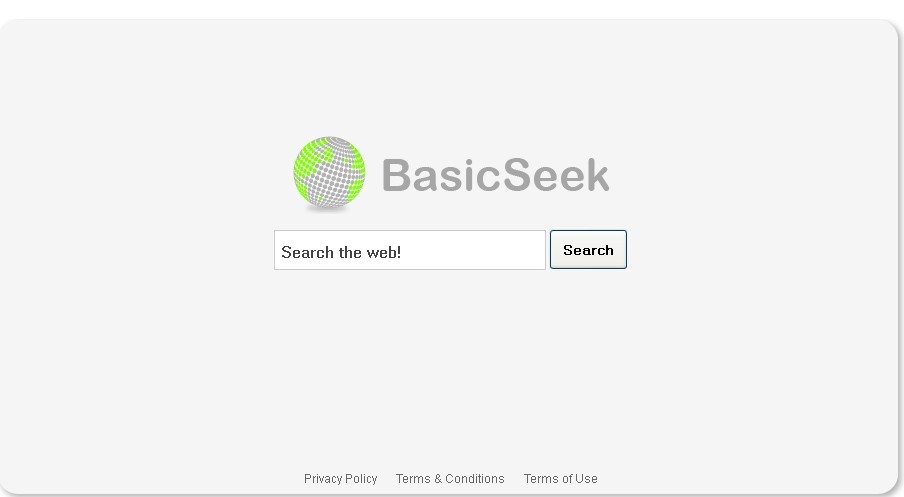
Basicseek is a harmless domain with a search box at first sight. It is also easy to see that Basicseek is created with a poor or ad-serving arithmetic. Search result originated from Basicseek search is manipulated to display the sponsored websites. In other words, Basicseek will drive traffic to client web sites by forcefully inserting its own search engine. Then the browser hijacker will profit from such traffic which is known as pay-per-click ads campaign.
Apart from the negative impact on the target Internet Explorer, Firefox and Google Chrome with the irremovable Basicseek search page, you may also take notice of other accompanying unwanted changes such as slowness and out-of -work security services which in turn may be exploited by other infection. Therefore users should get rid of Basicseek.com virus once upon the click.

Take a Look at Basicseek.com Screenshot 


What Does Basicseek Do?

  • Replaces user search page with its own worthless search page.
  • Changes browsing settings to activate more salubrious pages.
  • Blocks visit to legit antivirus website and some tech support sites.
  • Turns off Firewall and Windows security center.
  • Installs other tricky plug-ins and add-ons on the target browser.
  • Records user browsing preference and displays ads correspondingly.
  • Introduces other malware, slows down the computer severely and others.

How Does Basicseek Gets Installed and How to Remove it?

Basicseek usually comes as a package to free browser enhancement programs, multimedia player and other shareware. But it may get separated from the bundled program and conceals its presence once completing the installation. And it makes difference if users try to reinstall the attacked web browser  either, nor emptying the temp file and browsing history makes any difference. You can follow below steps as reference to manually remove Basicseek.com browser hijacker:
Step1. Delete suspicious add-ons.
For Google Chrome
Go to Settings through Wrench icon.
Change the ‘On Start Up’ menu by setting it as www.google.com
Remove Websearch.just-browse.info virus from “search”.
Check the Extensions file to see whether any malware has made a backdoor entry there or not.
For Mozilla Firfox
Go to the Tools Options and then click on ‘restore to default’ icon.
Remove any add-on found.
Step 2 : Go to Task Manager with Alt+Ctrl+Delete and stop its process.
C:\windows\system32\services.exe
C:\Windows\winsxs\amd64_microsoft-windows-s..s-servicecontroller_31bf3856ad364e35_6.1.7600.16385_none_2b54b20ee6fa07b1\services.exe
C:\Windows\Installer\{bbee3ba2-89af-930c-bb78-1fb4e17db3cc}
Step 3: Navigate to remove the registry entries associated as below in Registry Editor:HKEY_LOCAL_MACHINE\SYSTEM\CurrentControlSet\Services\_VOIDd.sys
HKEY_LOCAL_MACHINE\SOFTWARE\Wow6432Node\Microsoft\Windows\CurrentVersion\Run\Random.exe
HKCU\SOFTWARE\Microsoft\Windows\CurrentVersion\Run\Random.exe
HKEY_LOCAL_MACHINE\software\microsoft\windows\currentversion\policies\explorer
“EnableShellExecuteHooks”= 1 (0×1)
HKEY_LOCAL_MACHINE\SOFTWARE\Microsoft\Windows\CurrentVersion\policies\Explorer\run\Random.exe

Notes: If you are still confused with above procedure, please click here to talk with an online expert for more details.